Abstract art has continually challenged our perceptions of reality, breaking traditional boundaries to explore emotions, shapes, and colors. Understanding the most famous abstract paintings is essential for anyone looking to appreciate the profound evolution of modern art over the past century. By stepping away from literal depictions, legendary abstract artists invited viewers to engage with their subconscious and find personal meaning within the canvas. If you love the bold colors and expressive style of abstract art, you can also explore modern abstract wall art prints available at Arts Fiesta to bring the same artistic energy into your home.
This departure from objective reality not only revolutionized the art world but also influenced countless other disciplines, including architecture and fashion. Exploring these iconic abstract artworks offers a window into the cultural contexts in which they were created, from pre-war anxieties to the boundless freedom of expression in the post-war era. Whether you are an art student or a collector seeking inspiration, diving into the stories behind these renowned masterpieces enriches your understanding of how abstract painters have forever changed the way we perceive art. Here is a curated list of famous abstract art pieces that every art enthusiast needs to know.
1. Untitled
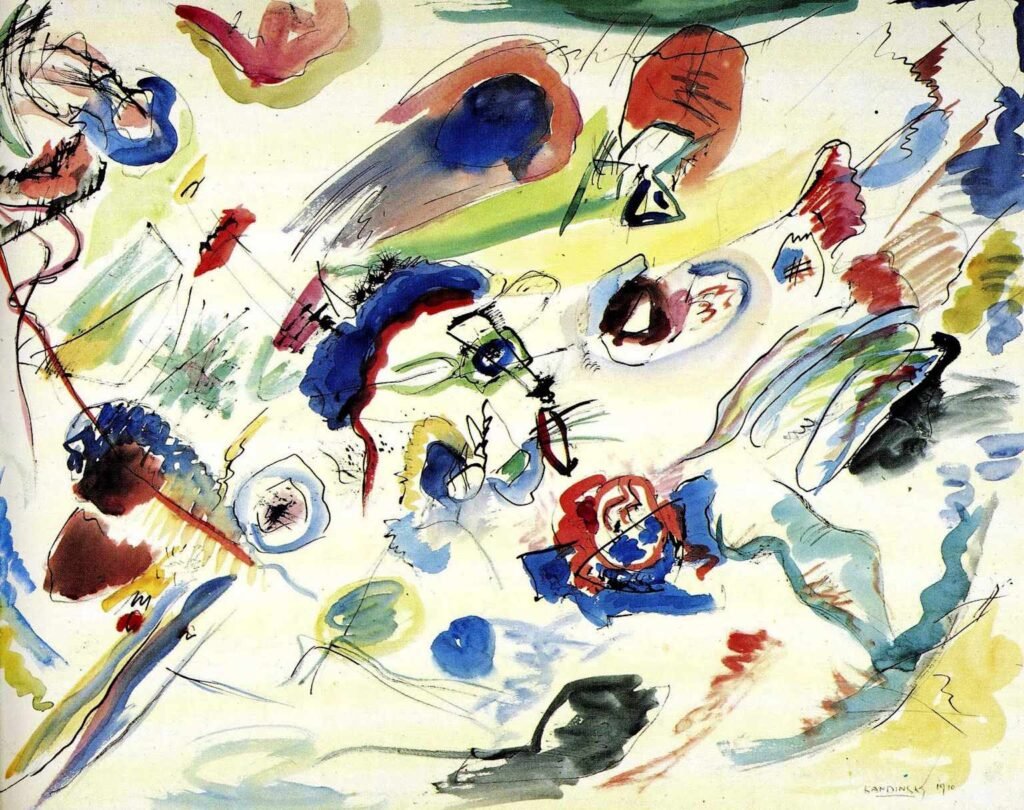
Artist: Wassily Kandinsky.
Year: 1910.
This piece is widely considered by art historians as the first purely abstract painting, freeing artists from the constraints of objective reality.
Created by the pioneer of abstraction, this watercolor composition masterfully utilizes vibrantly colored spots, smears, and energetic lines without referencing any recognizable subjects in the physical world. The artwork represents a pivotal moment in art history, inviting viewers to experience visual elements purely for their aesthetic value rather than their representative accuracy. Kandinsky believed that colors and shapes could evoke deep spiritual resonance, much like music does without relying on lyrics. This groundbreaking approach shattered conventional artistic norms and laid the foundational philosophy for the entire abstract art movement that flourished throughout the twentieth century.
Kandinsky’s belief that color alone could evoke emotion inspired generations of abstract artists and continues to influence modern abstract wall decor.
2. Improvisation
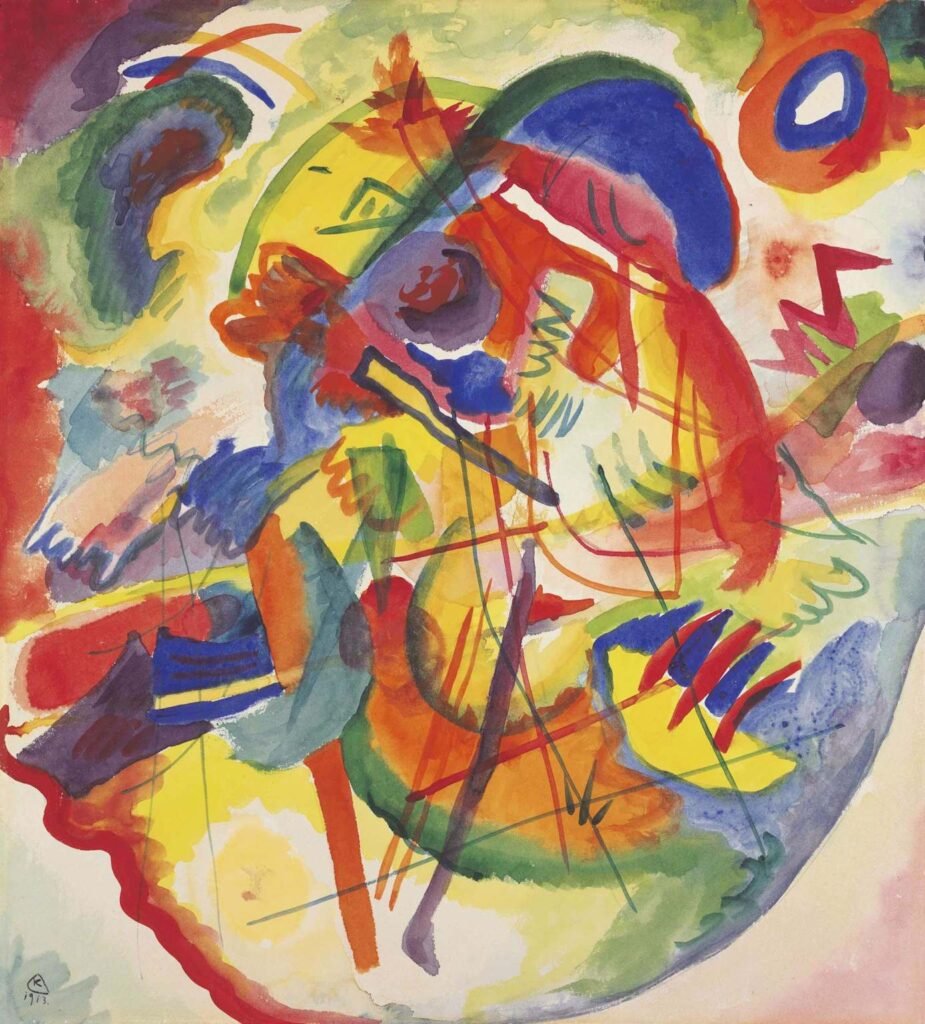
Artist: Wassily Kandinsky.
Year: 1913.
Painted just before the outbreak of World War I, this masterpiece subtly portrays two ships locked in a chaotic sea battle.
In this painting, Kandinsky brilliantly utilizes a stark contrast of vibrant colors to convey the tension and impending doom of global conflict. Despite the underlying theme of warfare and destruction, the artist intentionally infuses the composition with a profound sense of hope. He aimed to inspire humanity to turn away from suffering and embrace a more wholesome, spiritually elevated existence. The swirling forms and dramatic color palettes push the boundaries of early abstraction, requiring the viewer to look beyond the chaotic surface to grasp the profound philosophical and emotional messages hidden within the energetic brushstrokes.
3. Black Square
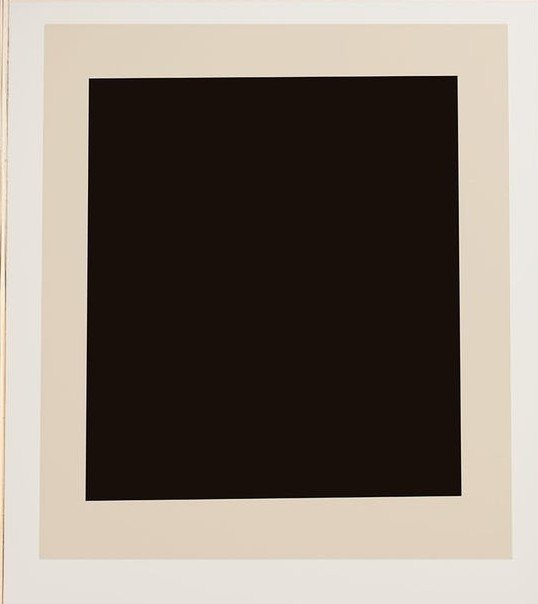
Artist: Kazimir Malevich.
Year: 1915.
This renowned artwork birthed the Suprematism movement, which prioritized the supremacy of pure artistic feeling over the depiction of reality.
Malevich’s square composition is consistently regarded by art critics as one of the most radical and best abstract paintings ever created. By painting a simple, stark shape on a white canvas, Malevich completely abandoned all references to the natural world. He sought to create an art form that was entirely detached from historical context, narrative, or objective representation. The painting is a profound exploration of geometric simplicity and visual purity, demanding that viewers confront their own emotions and thoughts without the crutch of familiar imagery. It remains a monumental symbol of modern art’s transition into total abstraction.
4. The Swan
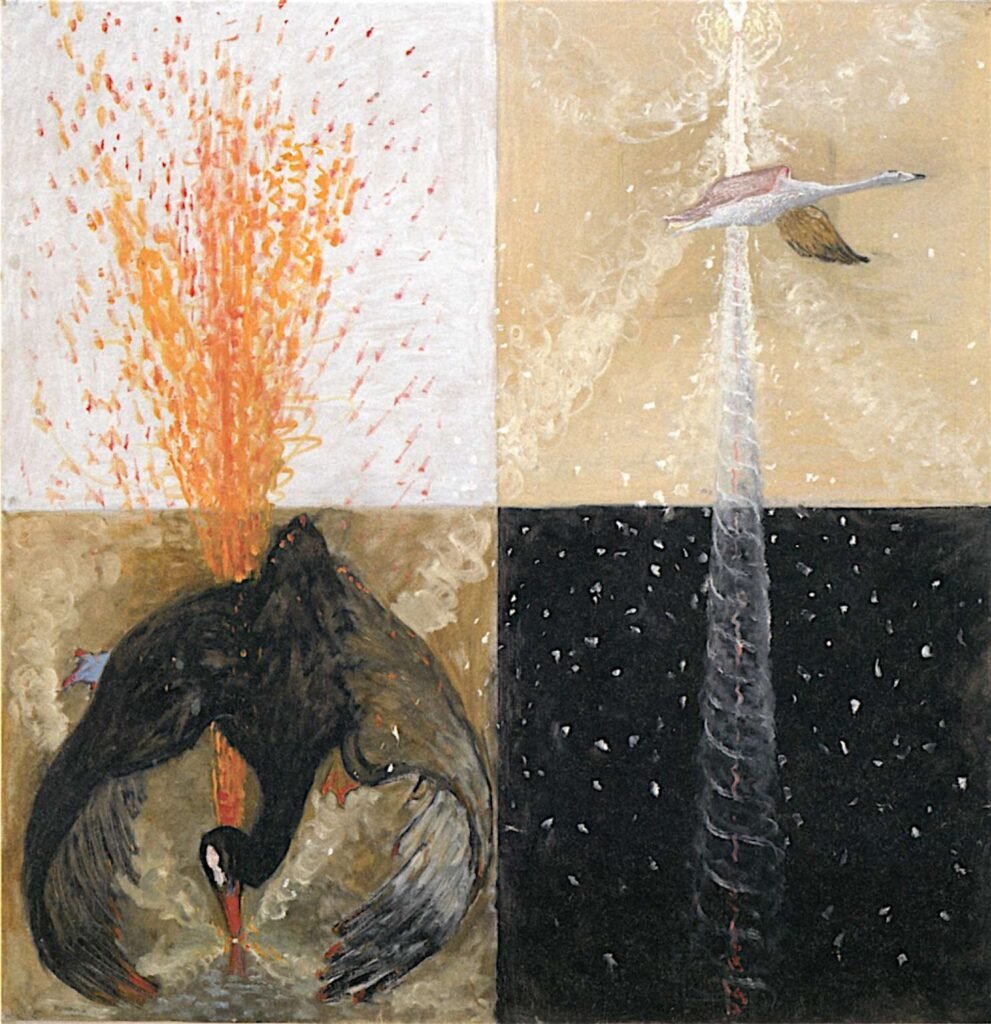
Artist: Hilma af Klint.
Year: 1915.
As one of the earliest pioneers of abstract art, the artist created this large-scale, minimalist piece representing swans in a sea of fire.
Standing at an impressive height of 1.5 meters, this painting is arguably the most minimalist and striking work created by the visionary Swedish abstract painter. The composition features a bold, dark red background that powerfully symbolizes an intense, spiritual fire. Within this fiery expanse, a distinct central sphere represents the swans, a recurring motif in her mystical artistic practice. The artist’s work was heavily influenced by her deep involvement in spiritualism and theosophy, and she intended her paintings to serve as a visual pathway to higher states of consciousness.
5. Tableau I
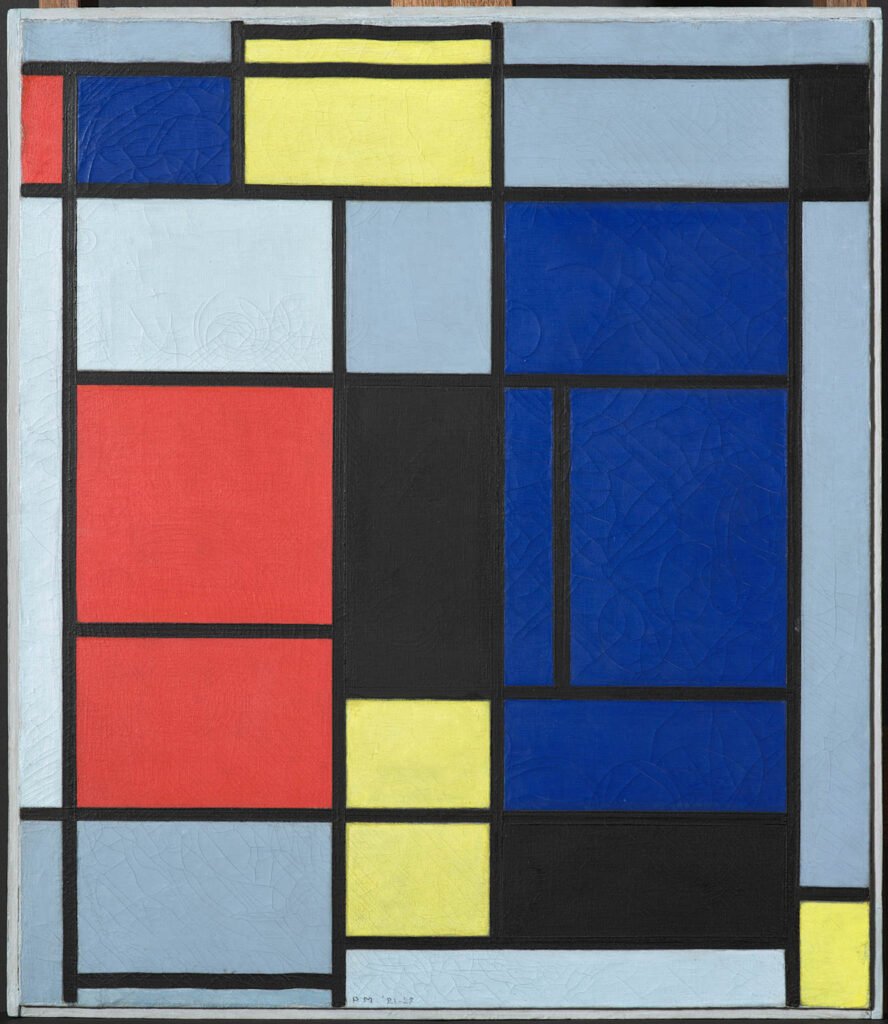
Composition with Red, Yellow, Blue
Artist: Piet Mondrian.
Year: 1921.
This defining piece solidified the artist’s signature style of using mathematical precision to separate panels of primary colors with thin black lines.
This painting represents a dramatic shift from the expressive, untamed works of earlier abstract artists, introducing a rigorous, calculated approach to painting. Mondrian meticulously utilized geometric shapes, strictly vertical and horizontal lines, and a constrained palette of solid colors. The artwork references nothing other than form, color, and line, aiming to achieve a universal visual harmony and spiritual order. This iconic masterpiece not only revolutionized the trajectory of modern abstract painting but also served as a profound source of inspiration for subsequent generations of artists, architects, and fashion designers worldwide.
Mondrian’s geometric abstraction later inspired countless modern minimalist interior designs.
6. Senecio
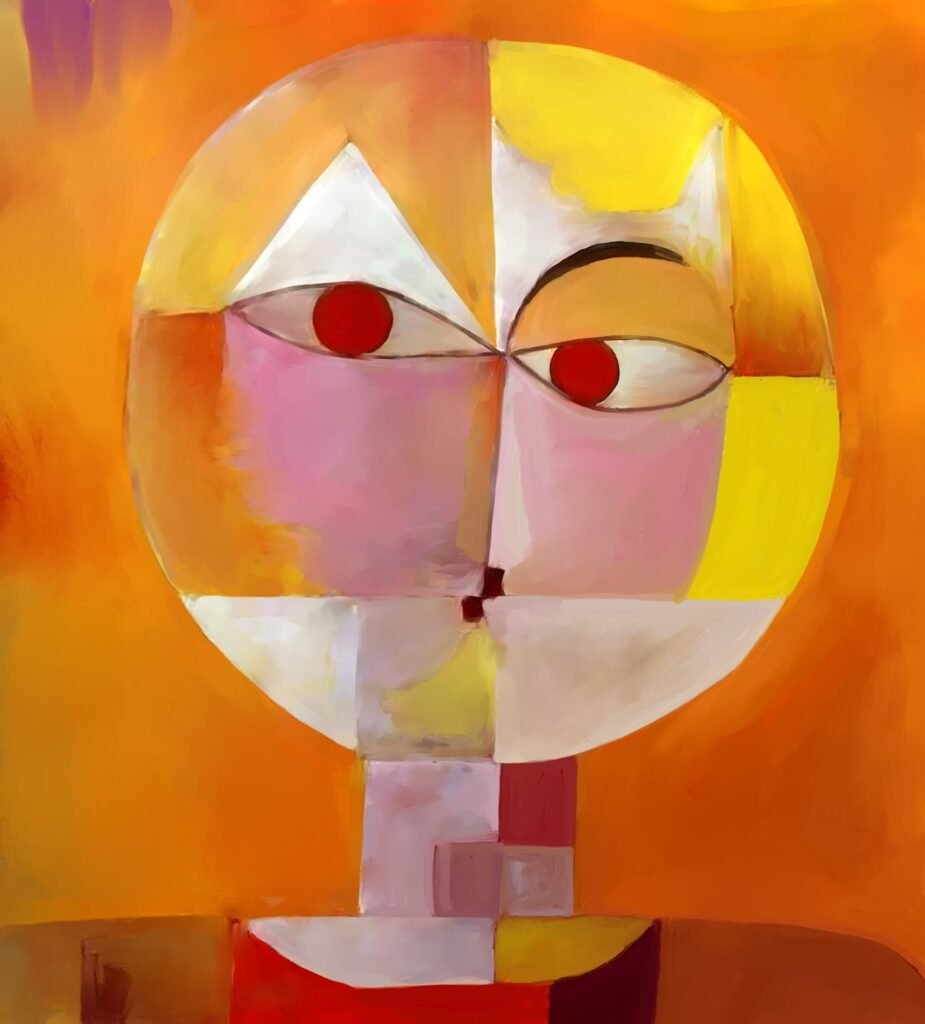
Artist: Paul Klee.
Year: 1922.
Inspired by African artistic cultures, Klee created this portrait using geometric structures to form the facial characteristics of a aged man.
In this painting, Klee beautifully demonstrates his distinct, highly individualistic style of abstraction, which often deliberately mimicked the uninhibited and playful aesthetic of children’s drawings. The painting employs various intersecting geometric shapes, such as circles, triangles, and squares, to cleverly assemble the subject’s face. By utilizing rich, warm shades of red, yellow, and orange, Klee infuses the portrait with a sense of aging and emotional depth. The artwork flawlessly bridges the gap between figurative representation and pure abstraction, highlighting Klee’s masterful ability to convey complex human characteristics through simplified, unconventional visual forms.
7. La mancha roja
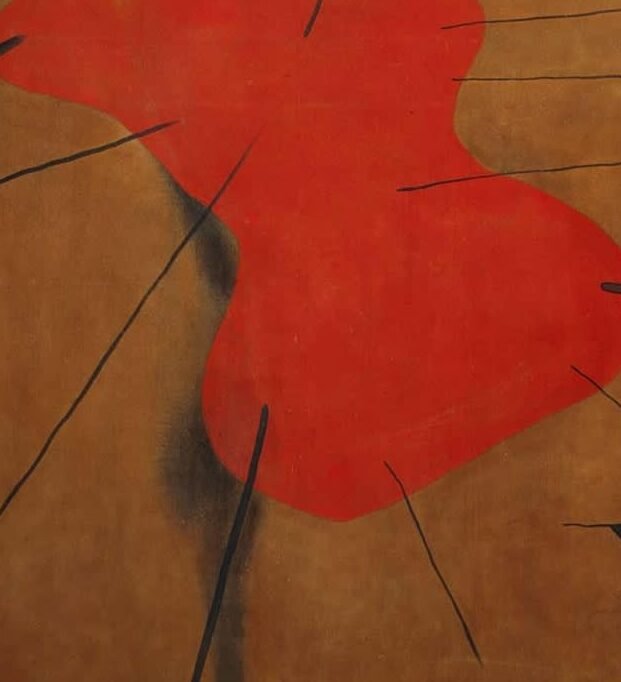
Artist: Joan Miro.
Year: 1925.
This playful yet frightening painting dissolves the barriers between Abstraction and Surrealism, bringing the artist’s subconscious visions to the canvas.
Miro notoriously rejected the label of an abstract painter, claiming he merely painted the vivid images that manifested inside his head after exhausting days. This painting is a testament to this philosophy, acting as a direct portal into human subconscious feelings and dreams. The composition features whimsical, almost childlike organic forms contrasted against a stark background, evoking a delicate balance between innocence and underlying psychological unease. By prioritizing emotional instinct over rigid structure, this famous abstract art piece opened new doors for artists to explore the depths of their own psyche and translate unseen dreams into tangible visual experiences.
8. Full Fathom Five
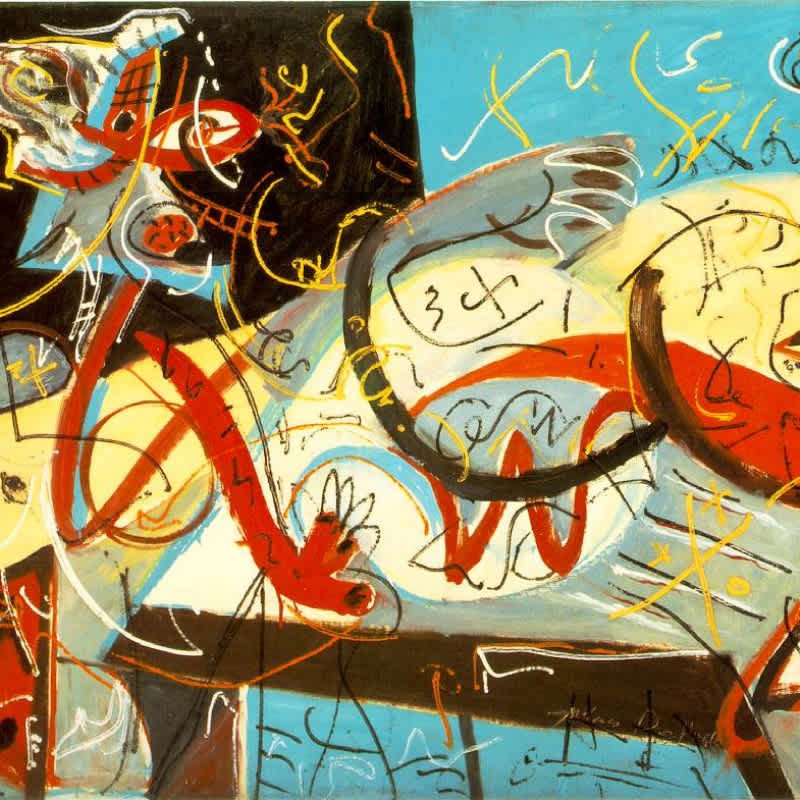
Artist: Jackson Pollock.
Year: 1947.
This iconic post-war painting introduced a revolutionary level of texturing by incorporating items from the artist’s studio into the dripping oil paint.
As a leading figure of the Abstract Expressionist movement, Pollock fundamentally changed how art was created. This painting is a masterclass in his signature technique, where he poured and splattered energetic particles of oil paint directly onto the canvas. The dense, layered composition heavily utilizes greens, blues, and blacks to beautifully yet chaotically display the sea and its inherent dangers. By embedding physical objects into the thick layers of paint, Pollock explored his subconscious and powerfully portrayed the pervasive anxiety of the post-war era, making it one of the most iconic abstract artworks ever produced.
9. Convergence
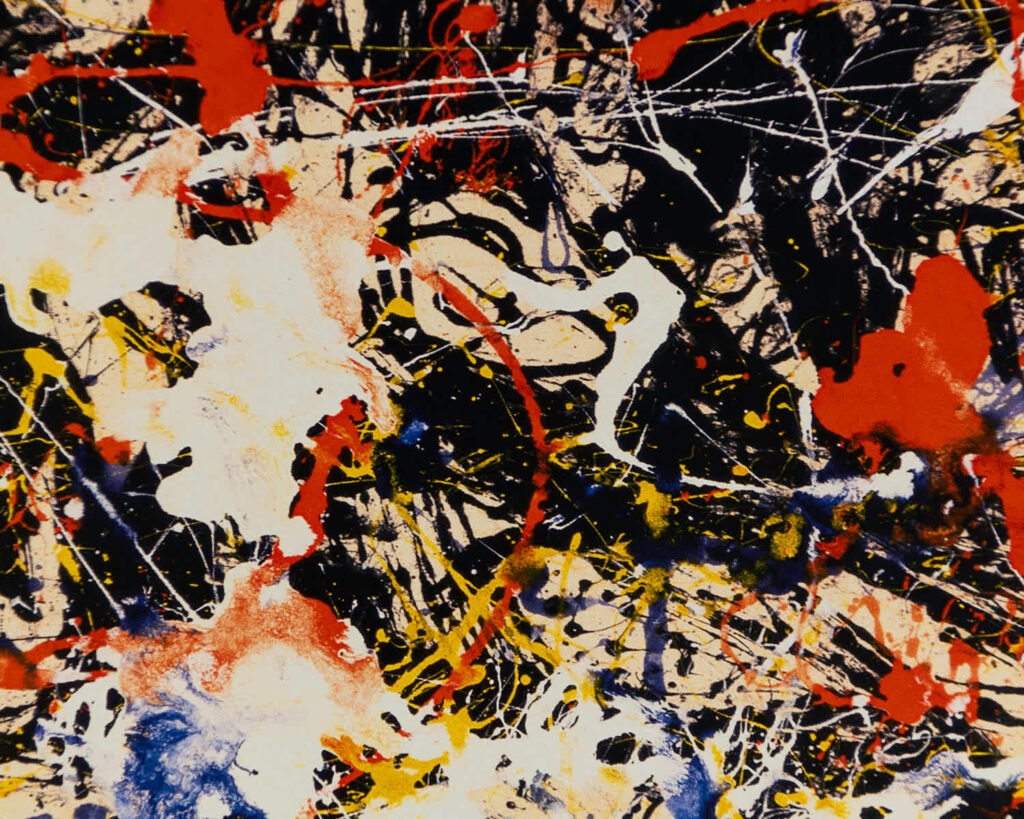
Artist: Jackson Pollock.
Year: 1952.
Considered the ultimate embodiment of free speech and freedom of expression, this masterpiece showcases the artist’s famously rebellious nature.
This painting is widely regarded as one of Pollock’s most famous and significant abstract artworks. The massive canvas is entirely engulfed in a chaotic yet mesmerizing web of circles, swirls, energetic lines, and dynamic splatters of color. The painting stands as a powerful, visual manifesto against societal conformity and political suppression, reflecting the embodiment of free speech. Pollock’s highly physical, uninhibited method of painting transformed the canvas into an arena of pure action and emotion. The resulting masterpiece requires viewers to immerse themselves completely in its complex, non-representational layers to fully appreciate the profound, liberating message of artistic freedom.
Today, Pollock-style compositions remain one of the most popular inspirations for contemporary abstract canvas prints.
10. Elegy
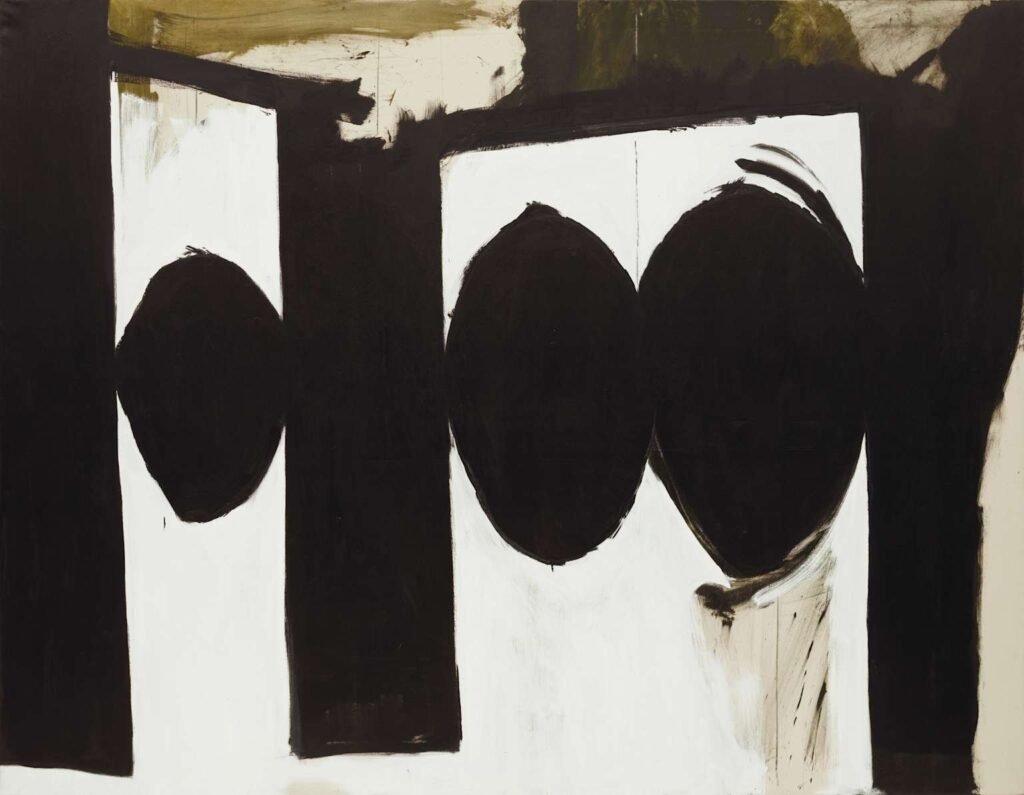
Artist: Robert Motherwell.
Year: 1971.
This energetic, aggressive masterpiece conveys notions of stoic strength and strange anxiety through its primal, conspicuous brushstrokes.
As a new stage in the development of abstract art began in the 1970s, Motherwell started creating incredibly vital and energetic pieces. This painting is widely considered the defining art piece of his career because of its striking vitality. The bold, aggressive shapes and aggressive brushwork make viewers feel as if the black paint is about to physically burst off the canvas and into the room. Through its primal abstraction, the artwork simultaneously conveys powerful feelings of stoic endurance and deep-seated anxiety, showcasing the incredible emotional weight that abstract expressionism continued to carry decades after its inception.
11. Orange, Red, Yellow
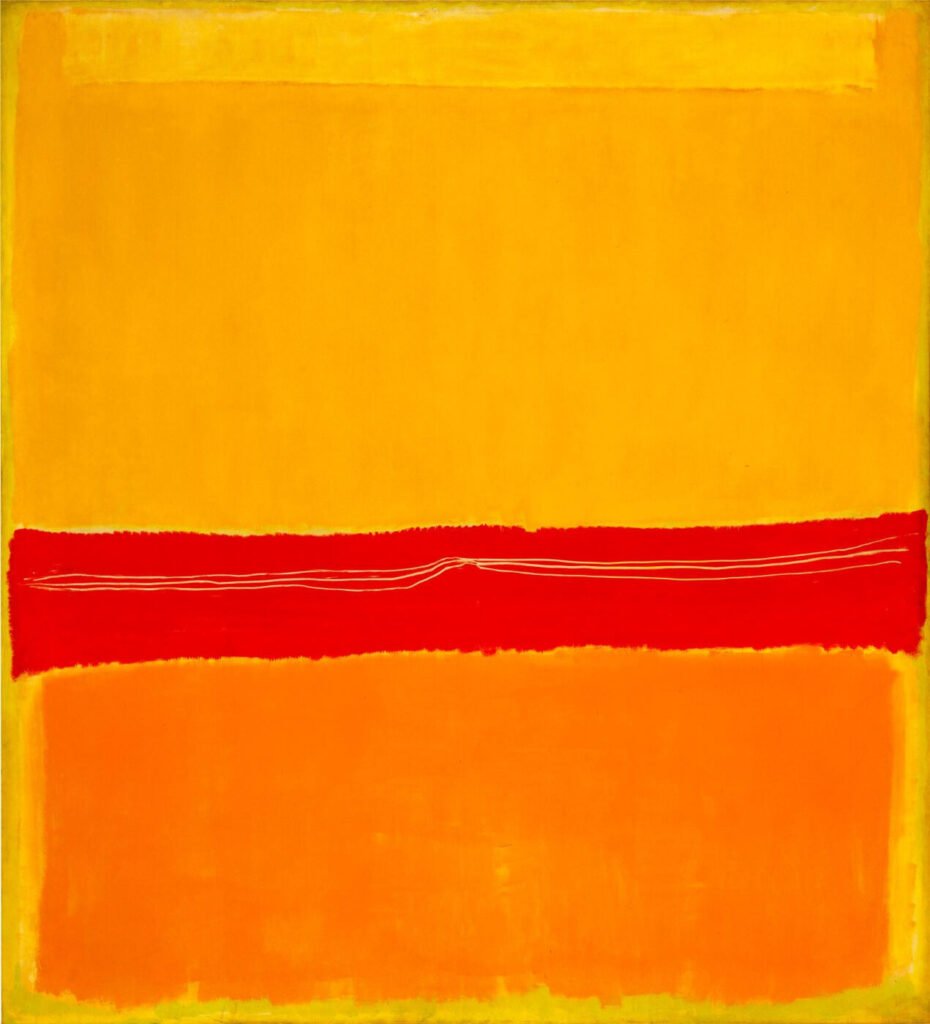
Artist: Mark Rothko
Year: 1961
A masterful display of color field painting, this artwork reflects Rothko’s philosophical quest to evoke the deepest of human emotions through pure abstraction.
Rothko firmly believed that art should not merely decorate but rather provide a transcendent, almost spiritual experience. Painted during an era when artists were moving away from traditional representation to grapple with post-World War II existentialism, Orange, Red, Yellow captures universal feelings of tragedy, ecstasy, and hope. By abandoning defined shapes in favor of large, pulsating blocks of warm, vibrant colors, Rothko invites the viewer to step into the painting’s emotional depth. The monumental scale of the artwork ensures that observers are entirely engulfed by its fiery hues, facilitating a profoundly personal connection with the canvas.
Color-field paintings like Rothko’s work are often recreated in modern interior art prints to add warmth and depth to living spaces.
12. Excavation
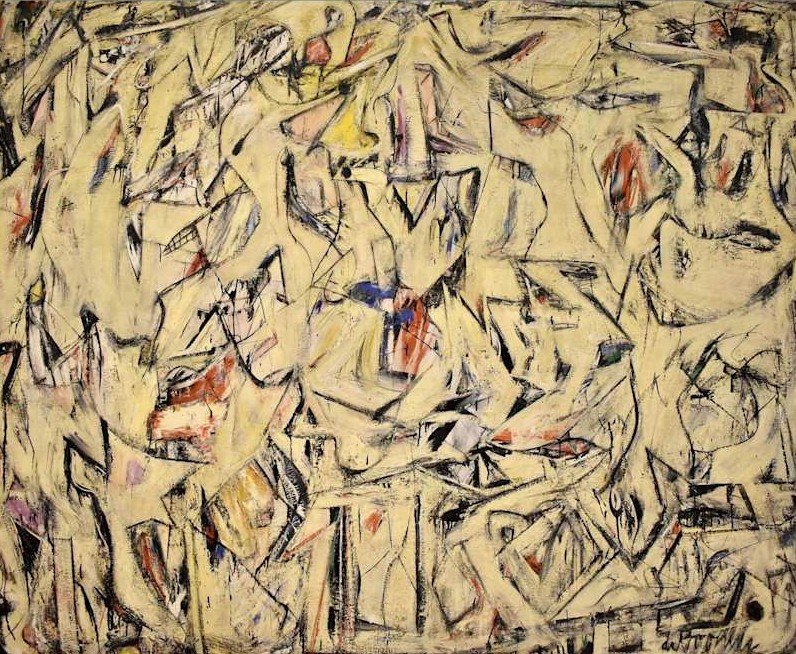
Artist: Willem de Kooning
Year: 1950
Considered de Kooning’s largest painting up to 1950, this piece was initially inspired by an image of women working in a rice field from an Italian Neorealist film.
Excavation stands as a pivotal masterpiece that beautifully demonstrates the tension between abstraction and figuration. De Kooning achieved this complex aesthetic by meticulously building up heavy layers of paint and vigorously scraping them down over a period of months. The resulting canvas is filled with expressive brushwork and sliding planes that subtly reveal anatomical parts like eyes, teeth, and jaws hidden within the chaotic, hooked lines. By effectively blurring the boundaries between liquid and solid, figure and ground, this artwork cemented de Kooning’s transition from private experimentation to celebrated public notoriety.
13. Mountains and Sea
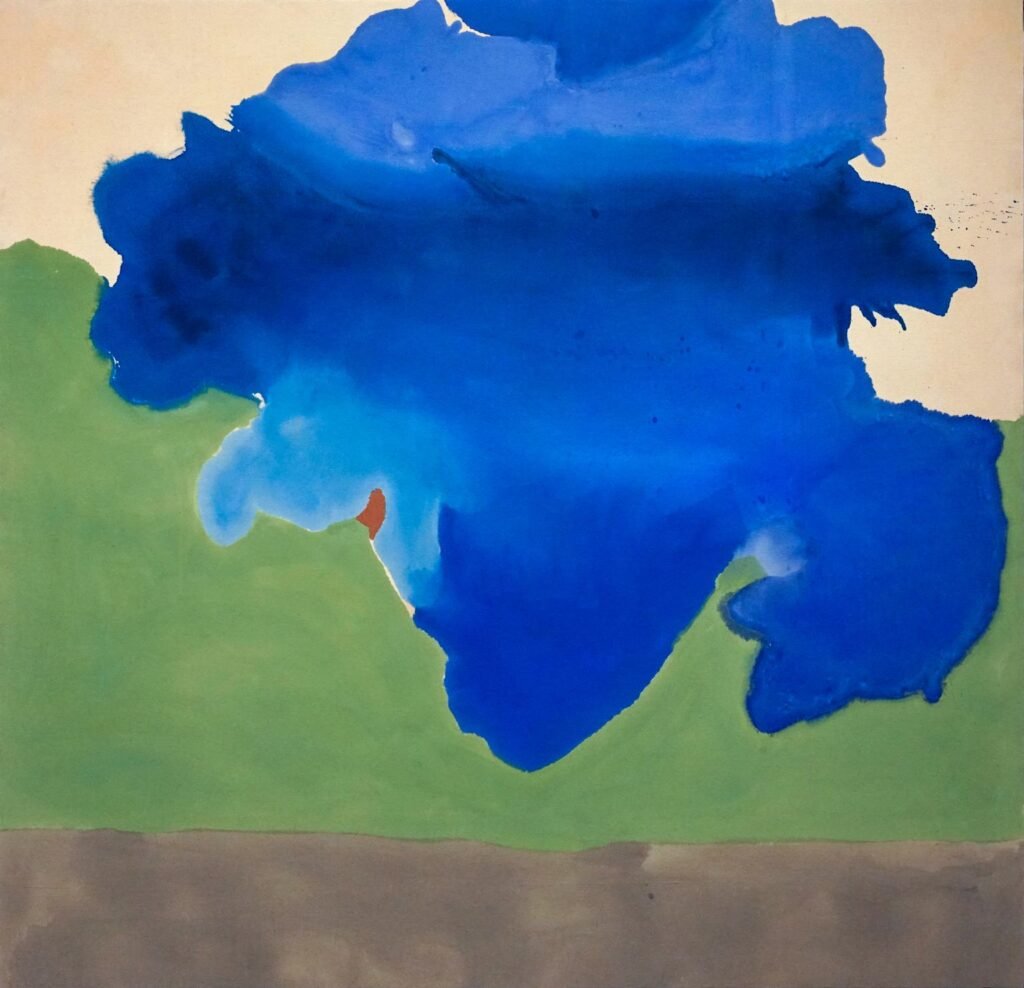
Artist: Helen Frankenthaler
Year: 1952
Painted when Frankenthaler was just 23 years old, this seminal piece was inspired by a summer road trip to the landscapes of Nova Scotia.
Mountains and Sea is a landmark painting that profoundly influenced the evolution of post-war American art. To create this masterpiece, Frankenthaler placed an unprimed canvas on the floor and poured oil paint thinned with turpentine directly onto it. This revolutionary “soak-stain” technique allowed the colors to bleed seamlessly into the fabric, creating diaphanous, ethereal washes of blues and greens. Instead of literally depicting the coastline, the painting fluidly evokes the feeling of the natural world, perfectly merging artistic spontaneity with controlled, abstract composition.
14. Vir Heroicus Sublimis
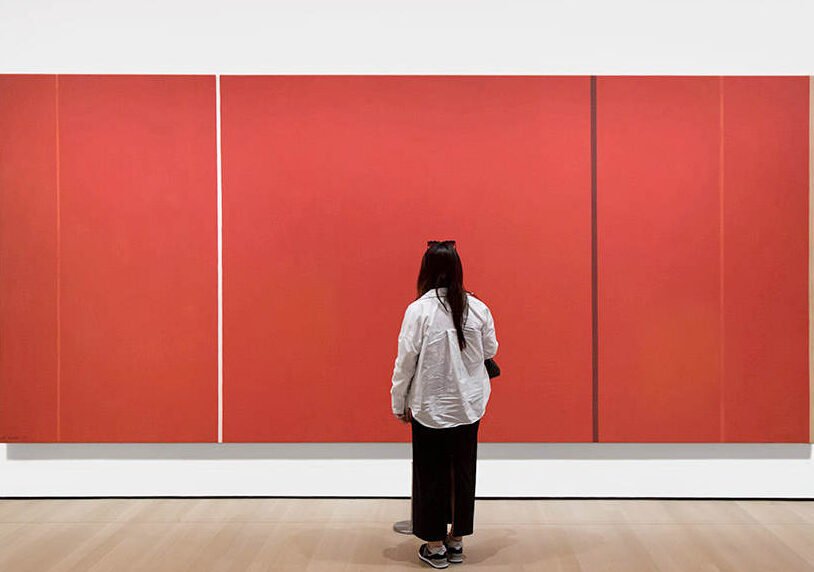
Artist: Barnett Newman
Year: 1950–1951
Translating to “Man, Heroic and Sublime,” this overwhelmingly large canvas was Newman’s attempt to capture the tragic human condition during the onset of the Cold War.
Newman believed that art should evoke profound, instinctual reactions rather than rely on societal connotations or recognizable subjects. Spanning almost 18 feet in width, the massive red field dominates the viewer’s lateral vision, making them feel as if they are in the presence of something monumental. The canvas is sharply divided by thin, vertical lines—often called “zips”—that structure the vast expanse. By removing color from its traditional context, Newman sought to communicate humanity’s terrifying realization of its own vulnerability, transforming the painting into a poetic outcry of existential awe.
15. 1957-D-No. 1
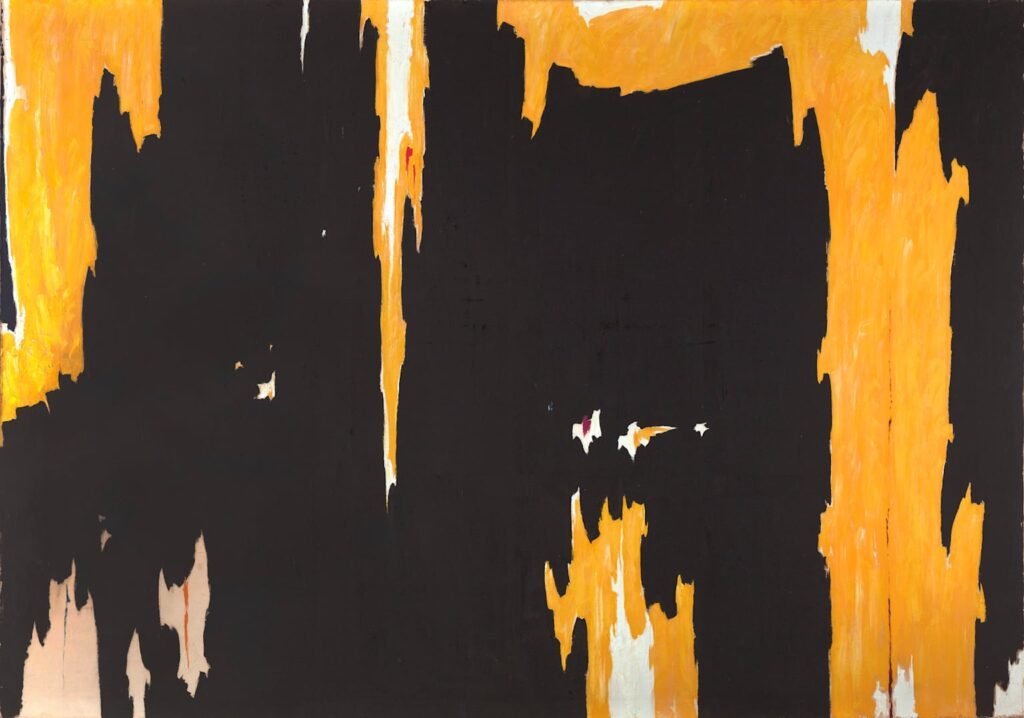
Artist: Clyfford Still
Year: 1957
This highly personal piece reflects Still’s secretive nature and his belief that his emotionally charged work should be shielded from the superficiality of typical art critics.
1957-D-No. 1 exemplifies Clyfford Still’s remarkable ability to create visually complex yet perfectly balanced compositions through color field painting. The massive canvas is dominated by dense black surfaces dramatically contrasted with jagged jolts of bright yellow, beige, and red. This intense opposition between light and dark creates a powerful, energetic tension that makes the space appear to advance and recede simultaneously. The violent, expansive bursts of color almost engulf the viewer, evoking a timeless sense of infinity and raw, unbridled emotion.
16. Abstract Picture (Abstraktes Bild)
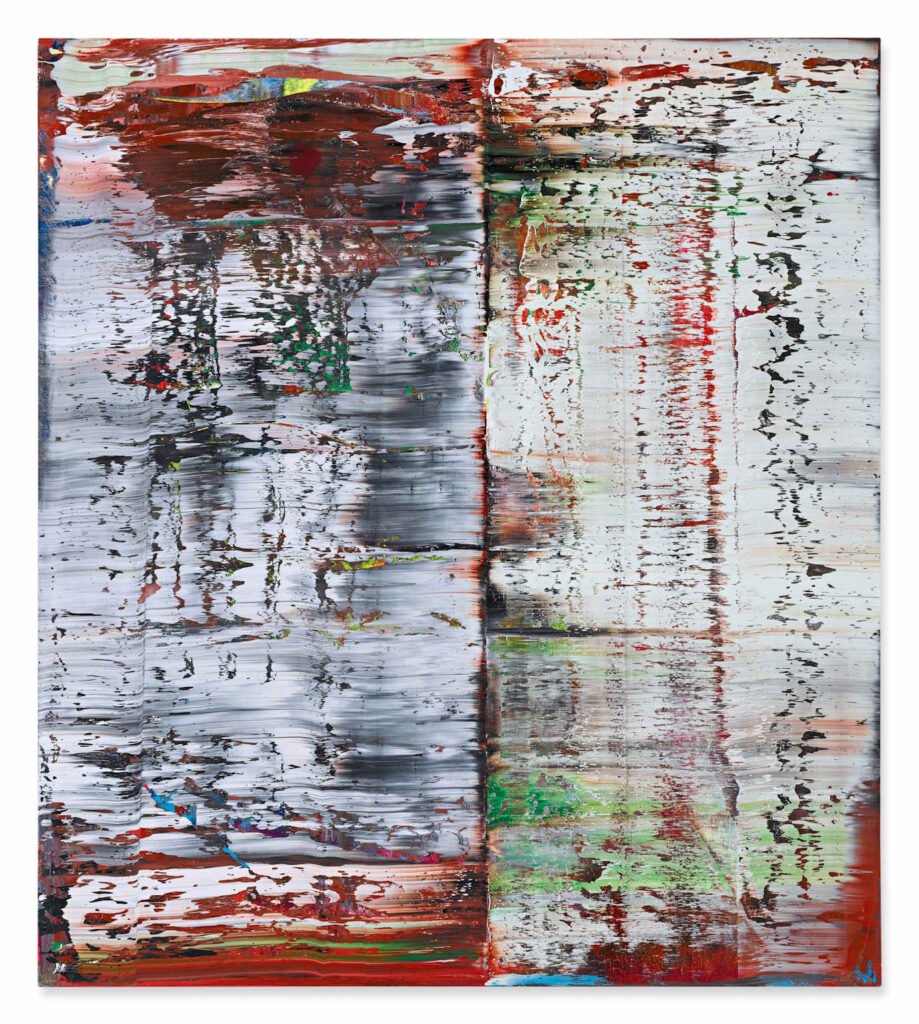
Artist: Gerhard Richter
Year: 1990 (Series)
Richter’s abstract works challenge the boundaries of reality, using a squeegee to drag thick layers of paint across the canvas in a deeply intuitive process.
Richter views his abstract paintings as fictive models that make invisible realities visible. By approaching the canvas without a preconceived motif, he embraces the unpredictability of the painting process itself. He relentlessly applies, scrapes, and smears wet layers of vibrant oil paint, creating intricate, textured surfaces that hover between mechanical precision and chaotic emotion. This deliberate abandonment of traditional imagery forces viewers to confront the raw materiality of the paint, highlighting the desperate, blind effort required to create something profoundly meaningful out of pure abstraction.
17. No. 5, 1948
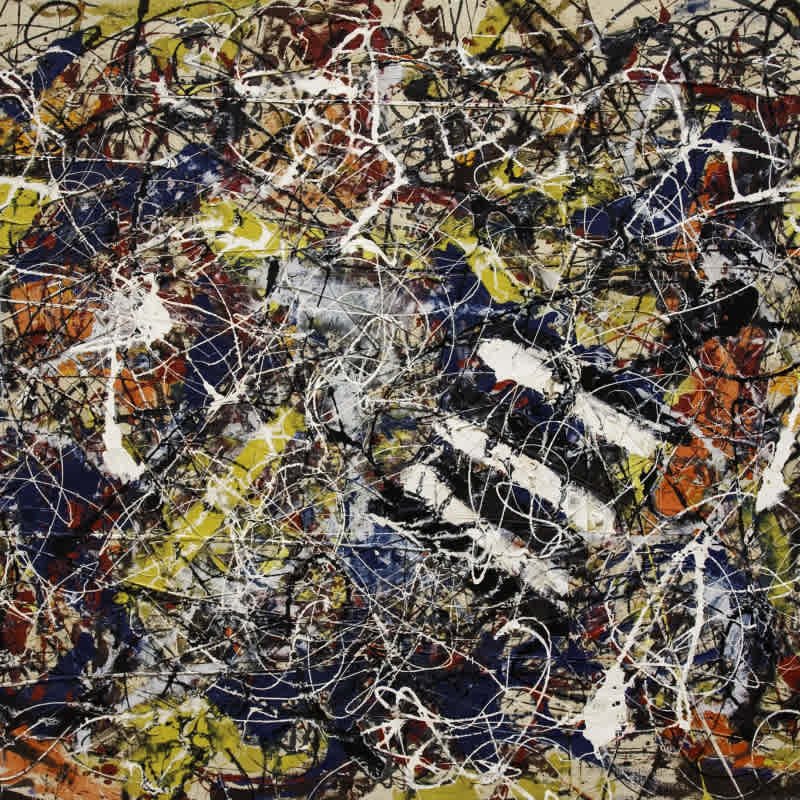
Artist: Jackson Pollock
Year: 1948
This painting is one of Pollock’s most famous “drip” artworks, embodying the chaotic energy and absolute freedom of the Abstract Expressionist movement.
Created by pouring, flicking, and dripping yellow and brown paint onto a massive fiberboard canvas placed on the floor, No. 5, 1948 completely redefined artistic techniques. Pollock’s highly physical method of “action painting” prioritized the raw emotion of the creative act over any recognizable form. The resulting dense, tangled web of color lacks a clear focal point, instead offering a sprawling, rhythmic composition that captures the frantic energy of post-war America.
18. White on White
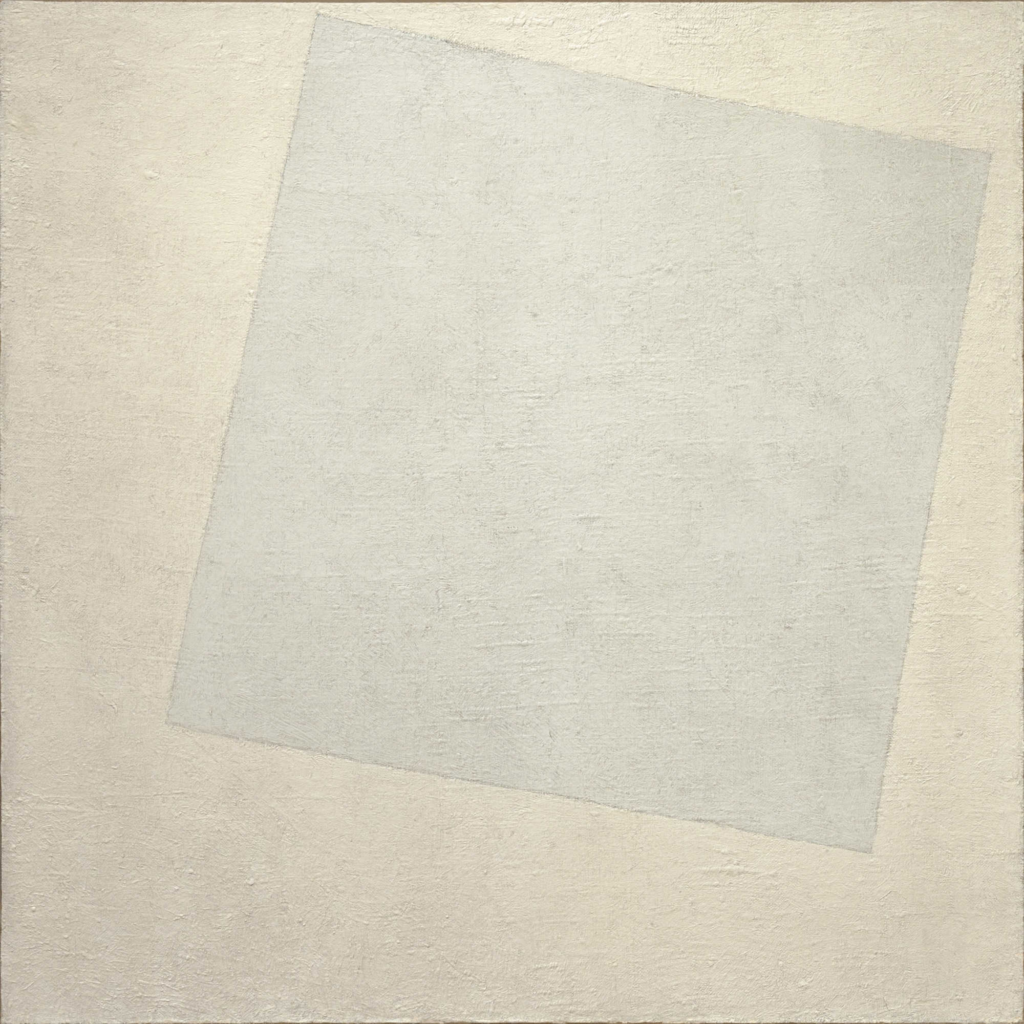
Artist: Kazimir Malevich
Year: 1918
Following the revolutionary Black Square, Malevich pushed Suprematism to its absolute limits by painting a white square floating on a slightly warmer white background.
White on White is one of the most radical abstract paintings in history, representing the ultimate stripping away of the objective world. By removing all color and recognizable forms, Malevich sought to achieve a pure, weightless state of artistic feeling. The asymmetrical placement of the inner square suggests a sense of infinite movement and spiritual transcendence. This daring rejection of traditional art norms challenged viewers to find meaning in the absolute void, laying essential groundwork for future minimalist movements.
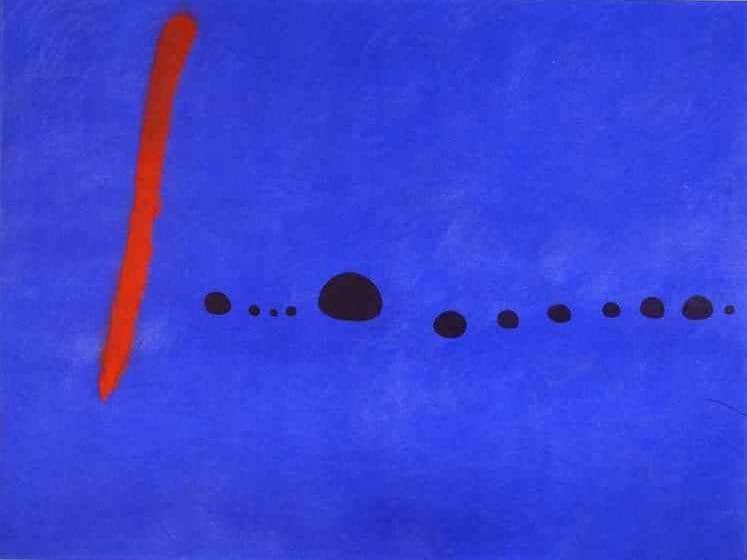
19. Blue II
Artist: Joan Miró
Year: 1961
Part of a triptych created during a deeply reflective period, this minimalist painting relies on vast expanses of blue to evoke the endless space of dreams.
Miró expertly blended Surrealist automatism with pure abstraction to create a visual representation of his own subconscious mind. Blue II features a monumental, atmospheric blue background punctuated by a few deliberate, organic shapes and stark black brushstrokes. The intense, vibrating blue creates a profound sense of emptiness and meditative calm, while the sporadic red and black marks introduce a subtle psychological tension. The painting exemplifies Miró’s poetic approach to abstraction, where less is vastly more.
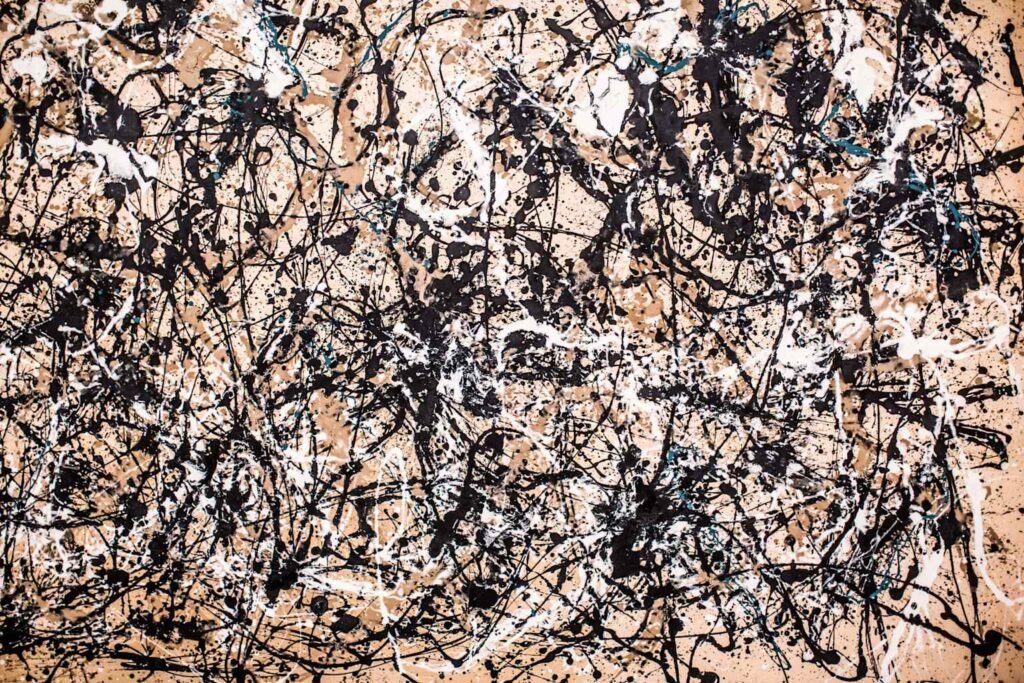
20. Autumn Rhythm (Number 30)
Artist: Jackson Pollock
Year: 1950
Widely regarded as the pinnacle of Pollock’s action painting era, this massive canvas masterfully records the spontaneous choreography of the artist’s body movements.
Using unprimed canvas laid directly on his studio floor, Pollock orchestrated a complex symphony of black, white, and brown enamel paints. Autumn Rhythm possesses neither a central focus nor distinct boundaries, yet it maintains an incredible, delicate balance. The fluid, looping lines and heavy splatters convey a natural, organic energy that perfectly mirrors the rhythm and complexity of nature itself. This iconic work demands that viewers step out of their logical minds and experience the pure, visceral emotion embedded in every unpredictable layer of paint.
The revolutionary paintings created by artists like Wassily Kandinsky, Jackson Pollock, and Mark Rothko continue to inspire modern interior design today.
If you love the expressive beauty of abstract art, explore curated abstract wall art prints from Arts Fiesta designed to transform your space.
FAQ
1. What is the most famous abstract painting in history?
One of the most famous abstract paintings is Black Square by Kazimir Malevich, created in 1915. The painting represents the radical idea that art could exist without depicting real-world objects, focusing purely on form and emotion.
2. Who was the first abstract painter?
Many art historians credit Wassily Kandinsky as the pioneer of abstract painting. His early work Untitled (1910) is often considered the first purely abstract artwork in modern art history.
3. Why is abstract art so popular today?
Abstract art allows viewers to interpret meaning based on their own emotions and experiences. Paintings by artists like Jackson Pollock and Mark Rothko transformed modern art by emphasizing expression rather than representation.
4. What defines abstract expressionism?
Abstract expressionism is an art movement that emerged in the 1940s and 1950s in the United States. Artists such as Jackson Pollock and Willem de Kooning used spontaneous brushstrokes and energetic techniques to express emotions directly on canvas.
5. Why do people buy abstract art for home decor?
Abstract art works well in modern interiors because it complements different color palettes and styles. Many homeowners choose abstract wall art prints to create a bold focal point in living rooms, bedrooms, and office spaces.